Adaptive XY control takes advantage of a Bruker-proprietary control technology “Model Based Inverted Iterative Control” to achieve a tracking accuracy (e.g., peak error) of less than 1% of the total scan range in a minimum amount of time. This inversion-based iterative control (IIC) is based on the work of Zou et. al.
After a user specifies a new Scan Size, Scan Rate or Scan Angle, the Adaptive XY algorithm automatically generates and optimizes a scan table. The scan table ensures high bandwidth tracking without introducing sensor noise.
For conventional PID (proportional, integral, derivative) closed-loop XY control, the tracking bandwidth is well below scanner's resonant frequency in the X and Y directions.
With Adaptive XY control, the tracking bandwidth can be even higher than the scanner's resonant frequency. Tens of Hertz can be achieved without compromising image quality:
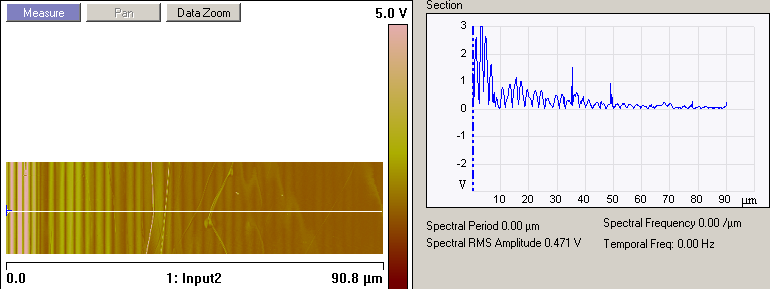
Figure 1: Scan taken with Adaptive XY Control Disabled. The periodic artifact is a product of XY scanner ringing.
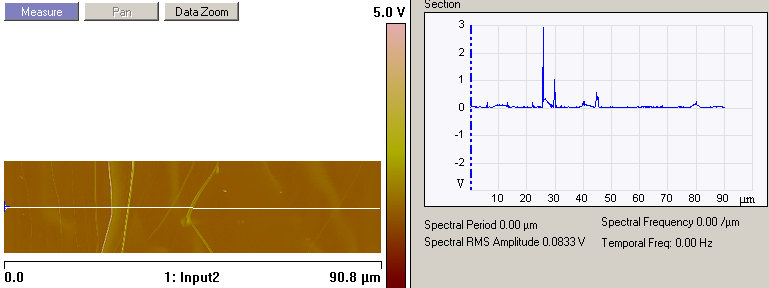
Figure 2: Scan taken with Adaptive XY Control Enabled. The ringing seen in figure 1 is absent.
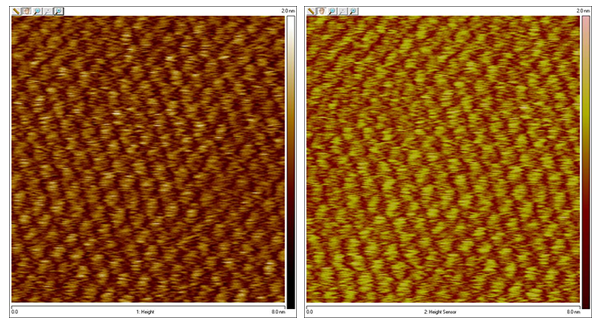
Figure 3: Adaptive XY 8 nm square Scan of Mica Showing Atomic Resolution (Left, Height data; Right, Height Sensor Data)
| www.bruker.com | Bruker Corporation |
| www.brukerafmprobes.com | 112 Robin Hill Rd. |
| nanoscaleworld.bruker-axs.com/nanoscaleworld/ | Santa Barbara, CA 93117 |
| Customer Support: (800) 873-9750 | |
| Copyright 2010, 2011. All Rights Reserved. |